

The Antimony Story
An Interview with Robert Allen Bartlett


This week I had the great privilege of sitting down once again with Robert Allen Bartlett to dive deeper into alchemy. This time, our conversation centred on his work with antimony and why this mysterious metalloid holds such profound importance in the Western alchemical tradition.
In Rasa Shastra and Ayurveda, antimony is called Anjana. The name most commonly refers to its ancient use as a collyrium (the black kohl applied to the eyes), but it also appears in numerous medicinal preparations as a carefully prepared bhasma (calcined ash).
During my studies in Sri Lanka and India, I was fascinated to see indigenous healers still using antimony compounds topically to treat severe bone fractures and badly damaged limbs, an application that echoes centuries of traditional knowledge.
If you enjoy these interviews, then please consider supporting my efforts by - ‘Buying Me A Coffee.’ It makes a huge difference, thank you!
Rasa Shastra texts are surprisingly reticent when it comes to the deeper nature of this particular Uparasa. They faithfully describe how to select, purify, and administer antimony, yet they often leave us guessing about which source material is intended, an ambiguity that has puzzled scholars and practitioners for centuries.
Some authorities clearly refer to the shining black mineral stibnite, while others appear to describe herbo-metallic or purely plant-derived substitutes that mimic its appearance and properties.
Compounding the confusion, certain lineages insist antimony must be alloyed or processed together with lead and tin before incineration, whereas others prescribe a far simpler path: purification followed by direct use as a therapeutic collyrium for the eyes. These divergent instructions remind us that, in the living laboratory of traditional alchemy, the same name could cloak very different substances depending upon epoch, region and lineage.
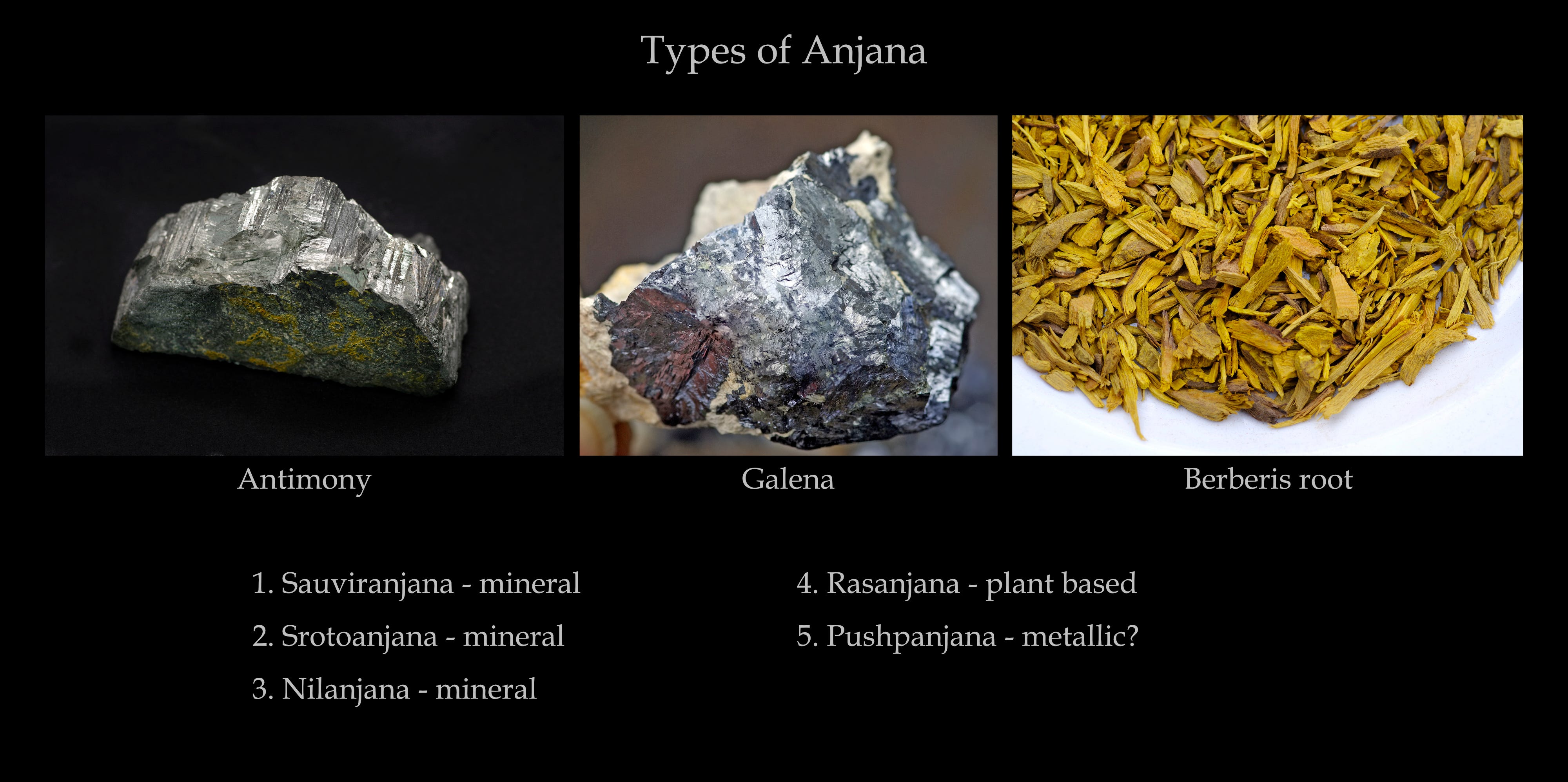
Five types of Anjana - as given in Rasa Shastra texts
In the Western alchemical tradition, the story of antimony is far less ambiguous, and far more dramatic. There it stands as one of the great initiators, revered both as a powerful regulus capable of purifying and transforming metals and, in its highest preparations, and, as a luminous medicinal elixir of remarkable potency.
Whether wielded as the martial “wolf” that devours the golden king or exalted as the star-born medicine of Paracelsus, antimony has always occupied a thrilling and central place in this tradition.
Robert Allen Bartlett, has spent decades working hands-on with this material in his laboratory. His recently published book is the first to focus exclusively on antimony, distilling both historical lore and modern laboratory experience into a clear, authoritative guide. Who better, then, to lead us through the mysteries of this glittering, dangerous, and deeply sacred material?
So sit back, relax, and step into the story of antimony, a tale as old as alchemy itself, full of fire, transformation, and hidden light.
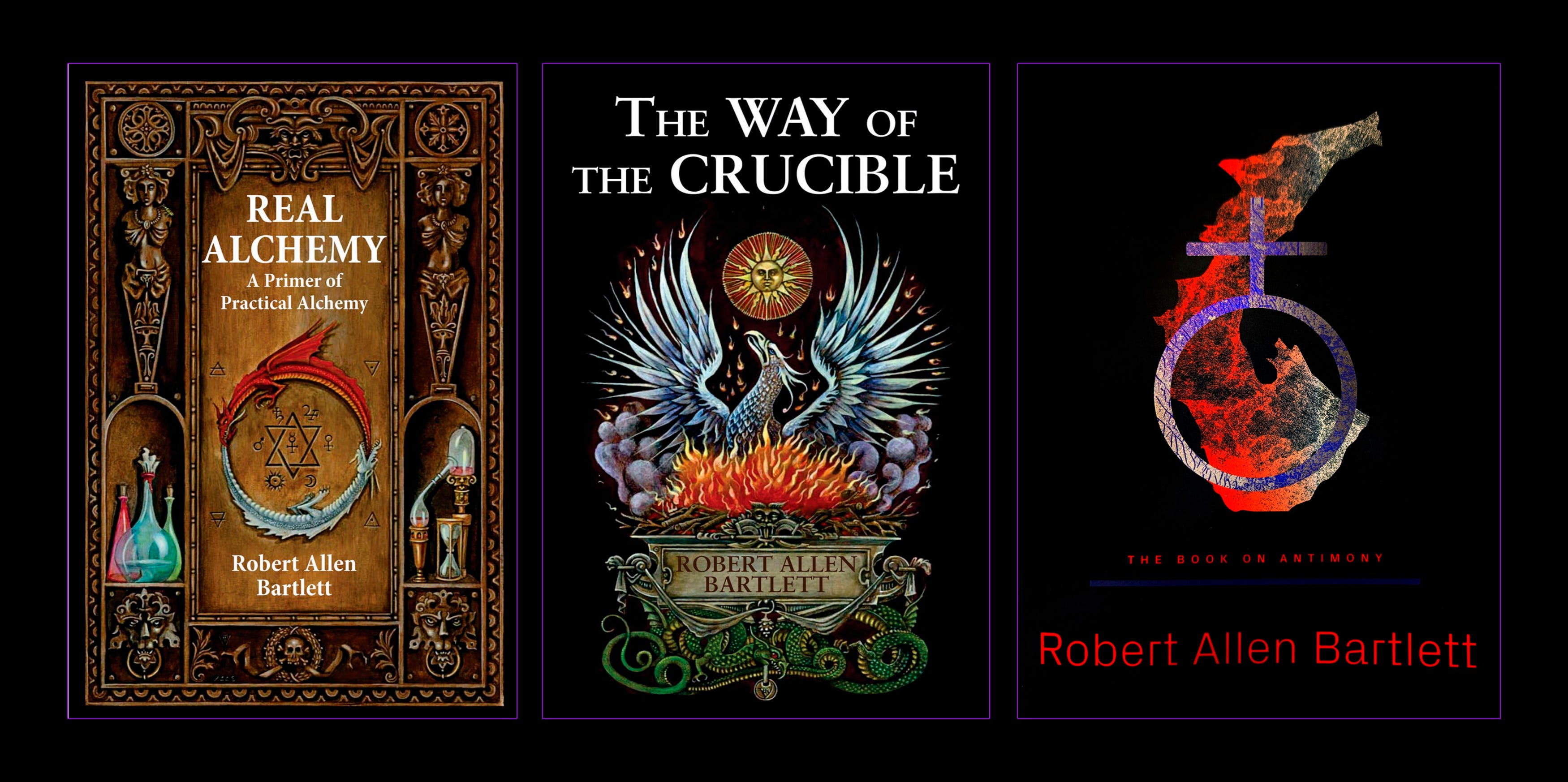
Three of Robert’s popular book, including - ‘The Book of Antimony’
USEFUL LINKS:
Email: spagyricus1@gmail.com